
Oct 29, 2026Material & Compliance
Tray Materials: Melamine, Polypropylene, Wood and Steel
The tray is the fleet's hardest-working platform. The material map — melamine, polypropylene, wood, steel, composite — and the duty each one earns.
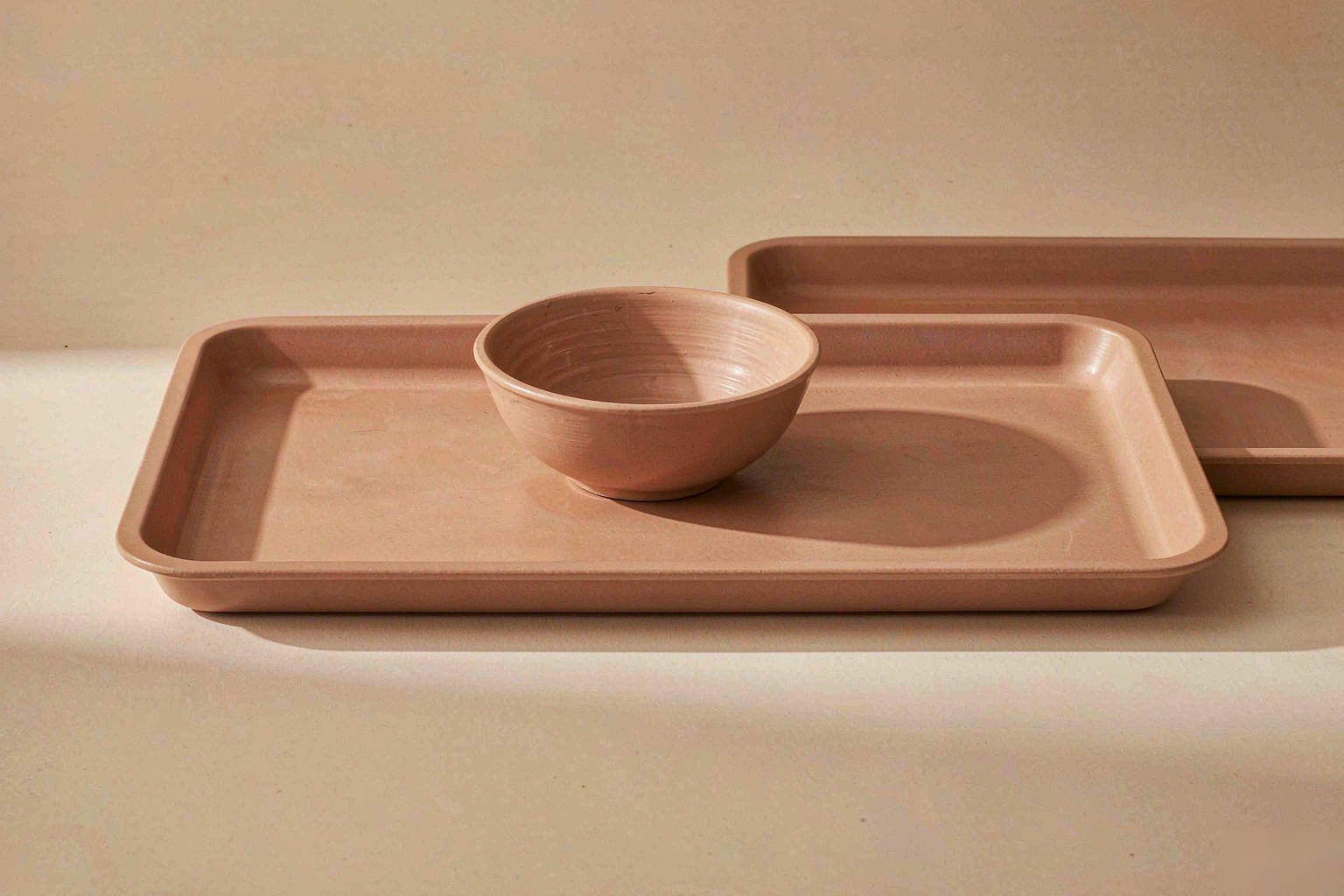
The tray is the fleet's hardest-working platform: it carries every meal in the self-service formats, rides the dish machine between every service, and takes the industry's most constant abuse. The material choice — melamine, polypropylene, wood, steel, composite — is a duty decision: each material earns its tray line. This guide maps them.
The Tray's Duty Profile
Tray duty is brutal by definition: loaded carries (the flex test), edge collisions (the bus tub's reality), continuous wash cycles, and the guest's judgment (the tray's condition is the buffet's hygiene read). The material's test battery: rigidity under load, edge durability, wash tolerance, stain resistance, and the register's look. The tray is bought for its second year, not its first day — the material that looks good new is table stakes; the material that looks good after a season of storms wins the fleet.
Melamine Trays
Melamine is the tray's premium tier: rigid, hard-surfaced, color-stable, and the closest to ceramic's register. The specs: rigidity under load (the loaded tray that does not flex), the gloss retention through wash cycles (the matte-worn retirement line), and the color program's stability. The trade: weight and cost — the melamine tray costs more and carries more, which the register tiers pay willingly. Melamine earns the dining-room tray lines: hotels, full-service buffets, the front of house.
Polypropylene Trays
Polypropylene is the volume tier: light, cheap, forgiving, and the self-service economy's workhorse. The specs: the flex tolerance (PP flexes by nature — the design compensates with ribs), the stain contract (tomato and curry tint it — the retirement line runs on color), and the UV note (outdoor PP chalks). The economics: the PP tray's low unit cost funds the replacement rhythm — the fleet that buys PP accepts it as a consumable with a managed curve. PP earns the canteen, the fast-casual tray line, the volume tier.
Wood and Bamboo Trays
Wood carries the rustic register: the serving tray under the stein, the board-tray for the meze, the breakfast tray's warmth. Its duty limits: the wash boundary (hand wash, dry immediately — the wooden-ware law), the oil discipline, and the seating-out from wet duty. The economics: wood is a maintained asset, not a wash-cycle consumable — it earns the serving and presentation lines, never the dish-line. The wooden tray is the register's accent: bought few, cared much.
Steel Trays
Stainless is the industrial tier: the bus tub's material, the kitchen's transport, the outdoor tier's indestructible option. The specs: the clang (the register's cost — steel is loud), the heat tolerance (hot items travel on steel without ceremony), and the edge sharpness management (the deburred quality line). Steel earns the back-of-house lines, the outdoor formats that ban glass and polymer heat, and the grill-adjacent service. The steel tray is the fleet's laborer: bought rarely, replaced never.
Composite and Specialty Trays
The specialty tiers: the non-slip composite (the textured surface that grips the glass), the compartment tray (the institutional format), the thermal trays (the heated-pellet systems where the format runs them). The specialty's logic: the tray engineered for a specific duty — the non-slip's surface, the compartment's menu architecture, the thermal's holding. The specialty tray is bought for the system it serves, not for the material alone.
The Match to Format
Format | Tray material logic |
|---|---|
Hotel buffet | Melamine for the register; PP for the volume lines |
Corporate canteen | PP economy with the replacement rhythm |
Fast casual | PP or composite non-slip; melamine at the premium edge |
Outdoor/garden | Melamine or steel; UV-stable polymers |
Room service | Rigid melamine with non-slip tops |
Rustic concepts | Wood serving trays; PP or steel behind |
The match's discipline: the tray is the format's platform — its material follows the duty, and the duty follows the concept.
The Fleet's Tray Math
The tray fleet's depth: covers in circulation × the wash turnaround — sized to the peak. The replacement rhythm: PP on its color curve, melamine on its wear line, wood on its maintenance schedule, steel on its decade. The tray ledger: the fleet's condition audited quarterly, the retirements logged, and the buying that follows the numbers. The tray math is the self-service format's quiet budget line — and it rewards the houses that count.
Frequently Asked Questions
What is the tray's first test? Rigidity under load: the loaded tray that does not flex. The flex test at sampling predicts the tray's whole service life.
Melamine or polypropylene for volume? PP for the economy tiers (a consumable with a color-curve retirement), melamine where the register earns the weight and cost. The format decides.
Why can't wooden trays take the dish line? The wooden-ware law: hand wash, dry immediately, oil on rhythm. Wood earns serving and presentation lines, never the machine.
Where does steel win? Back of house, outdoor formats, heat-adjacent duty — the clang is the register's cost, the indestructibility is the fleet's labor.
How is the tray fleet sized? Covers in circulation × wash turnaround at the peak, with the replacement rhythm per material — PP's color curve, melamine's wear line, wood's maintenance schedule.

