
Oct 27, 2026Chain Operations
Tailor Shears and Fabric Scissors: Offset Handles, Serration, and a Clean Cut Every Time
Tailor shears are the precision instrument of the scissor family: 9-11 inch blades, 5Cr15MoV steel, offset handles and micro-serration. How to specify and test them.
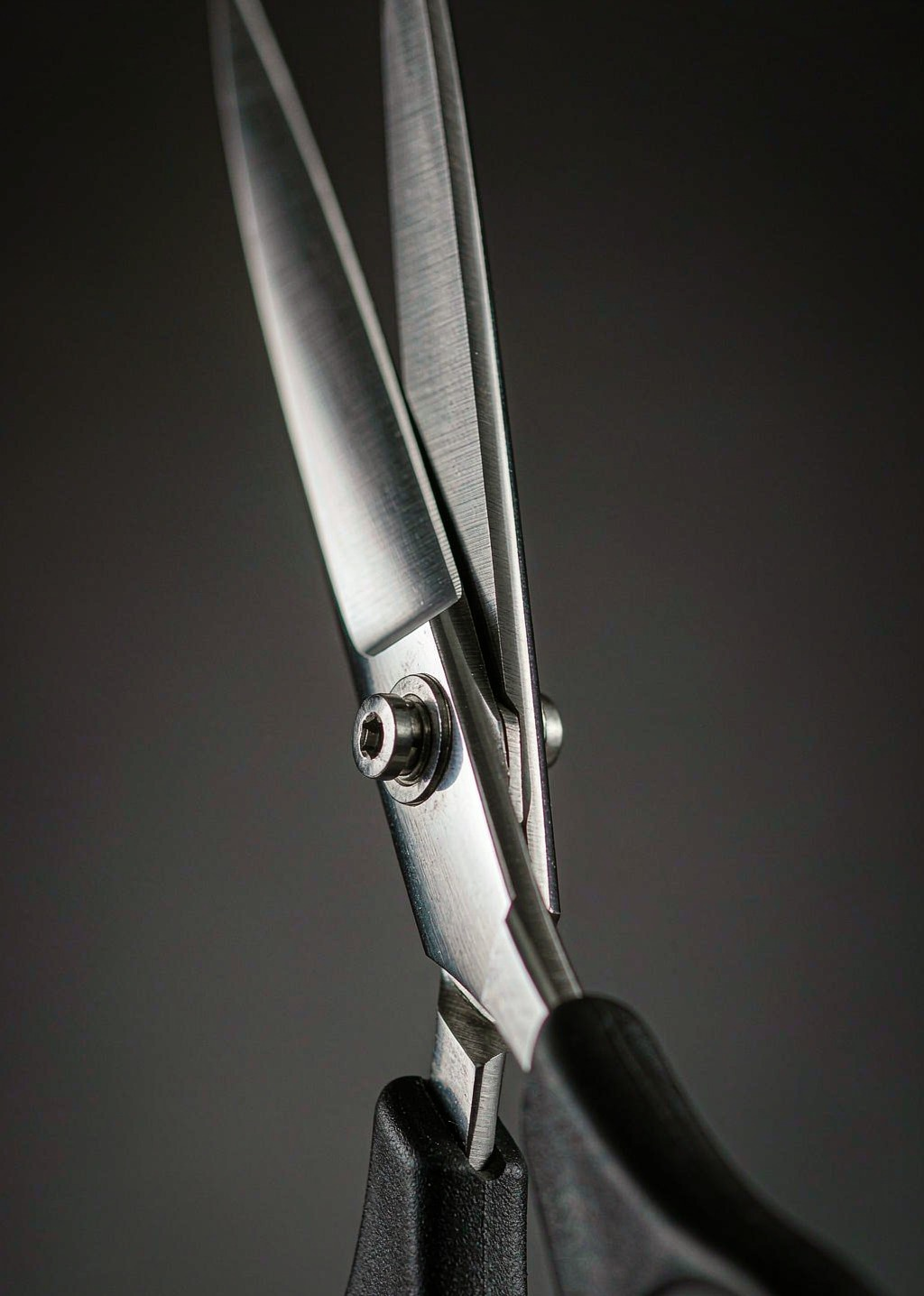
Tailor Shears and Fabric Scissors: Offset Handles, Serration, and a Clean Cut Every Time
Cut fabric with the wrong scissors and you learn the lesson in one meter: the cloth drifts, the layers shift, the edge frays. Fabric demands more from a pair of shears than paper ever will — and the shears that answer are among the most precisely made products in the hardware program. Tailor shears concentrate every important scissor variable into one tool: blade steel, edge geometry, handle ergonomics, and pivot control.
This guide covers what makes a tailor shear cut cleanly, why the handle is angled, and the acceptance tests that separate a professional tool from a gift-shop import.
The Anatomy of a Fabric Cut
Fabric cutting is a grip-and-shear operation. The upper blade pushes material down against the lower blade; the fibers between them fail in shear. Three things decide whether fibers cut cleanly or escape:
1. Blade gap under load. The blades must stay within a working gap — our platform specifies 0.03–0.12 mm — along the full cutting length. Too wide and cloth folds into the gap; too tight and the blades bind and wear. 2. Edge character. A micro-serrated edge grips slippery synthetic weaves; a polished plain edge gives the cleanest line on fine cotton and silk. Long fabric shears often pair a serrated lower blade with a polished upper. 3. Blade stiffness. Long blades flex. A 10-inch blade cutting four layers of denim needs section depth to resist bowing, or the gap opens at the midpoint and fibers escape mid-stroke.
Failure in any of the three shows up the same way: a cut that starts straight and drifts, or leaves a frayed thread line that a tailor must clean with scissors anyway.
Why 9–11 Inches and 5Cr15MoV
Blade length in professional fabric shears clusters at 9–11 inches (23–28 cm) for a mechanical reason: a longer blade cuts a longer line per stroke, and fabric cutting is stroke-count work. An upholsterer cutting a 3-meter line makes four strokes with a 10-inch shear and six with a 7-inch — across a workday, that difference accumulates in wrist load and cut consistency.
The steel specification follows the duty. Fabric is abrasive — especially denim and technical synthetics — and the shear works in long strokes where edge wear accumulates fast. 5Cr15MoV at 54–56 HRC holds the edge and its micro-serration profile far longer than value steels; 420-class blades polish beautifully but re-serrate or re-sharpen sooner under daily fabric load.
Corrosion matters less than for kitchen shears, but the oil-and-sizing residues in fabric work still attack bare carbon steel — which is why stainless grades dominate the professional tier.
The Offset Handle: Ergonomics With a Side Effect
Look at professional tailor shears from the side and the handles are bent — the lower handle drops below the blade line. This offset exists because fabric is cut on a flat table. A straight-handle shear forces the user to lift the fabric off the table to complete a stroke; the offset keeps the lower handle and fingers on the table plane, so the blade does the lifting and the hand stays relaxed.
Across a cutting day, that geometry is the difference between comfortable work and a sore wrist. The offset angle also changes the shear's balance: more weight sits under the hand, which improves control on long strokes.
The side effect is interchangeability: an offset shear feels wrong cutting paper in the air. That is not a defect — it is the tool telling you it was designed for a table.
Micro-Serration: Grip Versus Finish
The lower blade of many fabric shears carries a micro-serrated edge — teeth too small to see clearly, big enough to feel as a faint rasp. Serration grips the cloth so layers cannot slide forward as the blades close. On slippery modern synthetics, it is the difference between cutting and pushing.
The trade-offs are real and belong in the specification:
Serration leaves a slightly rougher fiber edge on very fine fabrics. Formalwear and silk ateliers order plain polished edges; production sewing and upholstery order serrated.
Serration holds alignment better than polish — the teeth re-grip as they wear — but once worn flat, the blade re-sharpens to plain.
Serration side matters: conventionally the lower blade carries it, gripping against the table side where fabric is least mobile.
A buyer should state which side is serrated, and whether the upper edge is polished or coated. Our partner factories hold the serration profile against a 0.03–0.12 mm blade gap window with 100% gap inspection on the tailor line — the metric that keeps serration and edge working together rather than fighting.
Acceptance Tests Before You Order
Test | Method | Pass |
|---|---|---|
Full-length cut | Cut a single clean line through two meters of your actual fabric | No drift, no fraying, no blade separation at the start |
Multi-layer grip | Cut 4+ layers of denim or canvas | Layers do not shove forward; cut completes without forcing |
Blade gap | Feeler gauge at pivot, mid, tip | 0.03–0.12 mm full length |
Pivot cycle | Open-close 500 times; re-check gap and torque | Gap unchanged; pivot tight |
Offset comfort | Cut continuously at a table for 10 minutes | Wrist stays relaxed; no fabric lifting |
Finish | Serration profile and polish against approved sample | Uniform serration; no grinding marks on plain edge |
The full-length cut on real fabric is the test that matters most — and the one most often skipped. A shears that cuts paper perfectly can still drift on viscose.
Sourcing Notes for Retail and Trade Channels
Tailor shears sell on trust: the buyer is often a professional whose tools are their income. That shapes the channel specification. Gift packaging with tension-fit inserts suits the atelier and premium retail channel; bulk packs for sewing schools and production floors prioritize blade protection over presentation.
Handle size matters more here than in any other scissor family: professional users have strong preferences between straight and offset, and between ring sizes. Our partner factories produce on a shared scissor platform — kitchen, tailor, household, and grooming families — which lets a retail line span all four with consistent quality control, including the 100% blade-gap inspection that only the tailor line requires.
Frequently Asked Questions
Why are fabric shears offset?
The offset keeps the lower handle on the table plane while the blade cuts, so the user does not lift fabric with each stroke. It reduces wrist strain over long cutting sessions and improves control.
Should I choose serrated or plain blades?
Serrated lower blades grip slippery and multi-layer fabric; plain polished edges give the cleanest line on fine single-layer material. Many professional shears pair a serrated lower with a polished upper.
What steel should tailor shears use?
5Cr15MoV at 54–56 HRC is the professional baseline: it holds both the edge and the serration profile under abrasive fabric load, with corrosion resistance for workshop humidity.
How do I test shears before buying a program?
Run the full-length cut on your actual fabric, check blade gap at three points with feeler gauges, cycle the pivot 500 times, and cut multi-layer fabric to test grip. Record gap and cut quality per sample against the approved standard.
Stocking or specifying professional tailor shears? Send your channel, blade length preference, and packaging needs through our contact page. Our partner factories run 100% blade-gap inspection on the tailor line — 0.03–0.12 mm — with samples dispatched in 7 days.

